

Thursday 13 March 2025
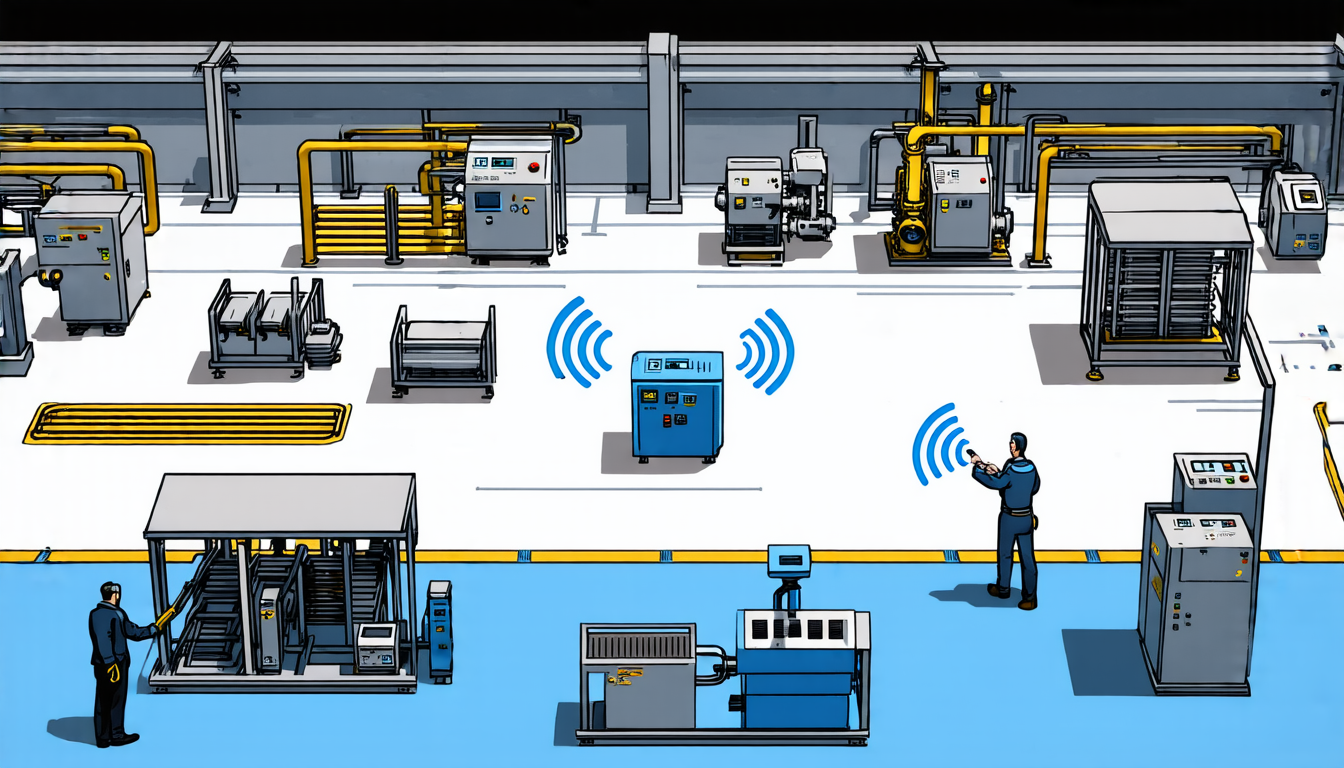
In a quest to revolutionize manufacturing, researchers have been working on integrating wireless technology into industrial settings. The goal is to create a more agile and responsive production process, where machines can communicate with each other seamlessly and adapt to changing conditions in real-time.
The latest development in this area is the use of 5G Time Sensitive Networking (TSN), which combines the reliability of wired networks with the flexibility of wireless communication. In a recent study, scientists simulated the performance of 5G TSN in an indoor factory setting, using various environmental models to test its capabilities.
The results are impressive: 5G TSN can reliably support latency-sensitive applications in controlled environments, such as manufacturing floors. This means that machines can communicate quickly and accurately, allowing production lines to adapt to changes in demand or supply.
But what does this mean for the industry? In short, it could be a game-changer. With 5G TSN, factories can respond more rapidly to changing market conditions, reduce downtime, and improve overall efficiency. This could lead to significant cost savings and increased productivity.
One of the key challenges in implementing 5G TSN is managing the complexity of wireless communication in industrial settings. Indoor environments can be particularly challenging, with obstacles such as walls, machines, and people interfering with signal quality.
To overcome this, researchers used a range of channel models to simulate different environmental conditions. These included models for sparse clutter (e.g., a small number of objects), dense clutter (e.g., a large number of objects), and high base station placement (e.g., placing the wireless transmitter high up in the factory).
The results showed that 5G TSN can perform well even in challenging environments, such as those with dense clutter or high base station placement. However, sparse clutter environments proved to be the most favorable for 5G TSN performance.
The study also explored the impact of varying numbers of devices on network performance. As expected, increasing the number of devices led to a decrease in signal quality and reliability. However, even at high device densities, 5G TSN was able to maintain acceptable levels of performance.
Overall, this research demonstrates the potential of 5G TSN for industrial applications. While there are still challenges to be overcome, the technology has shown promise in simulating real-world environments. As the industry continues to evolve and adapt to changing demands, it’s likely that wireless communication will play an increasingly important role.
Cite this article: “Wireless Revolutionizes Industrial Manufacturing with 5G Time Sensitive Networking”, The Science Archive, 2025.
5G, Time Sensitive Networking, Wireless Technology, Industrial Settings, Manufacturing, Production Process, 5G Tsn, Latency-Sensitive Applications, Indoor Factory Setting, Environmental Models





