

Wednesday 19 March 2025
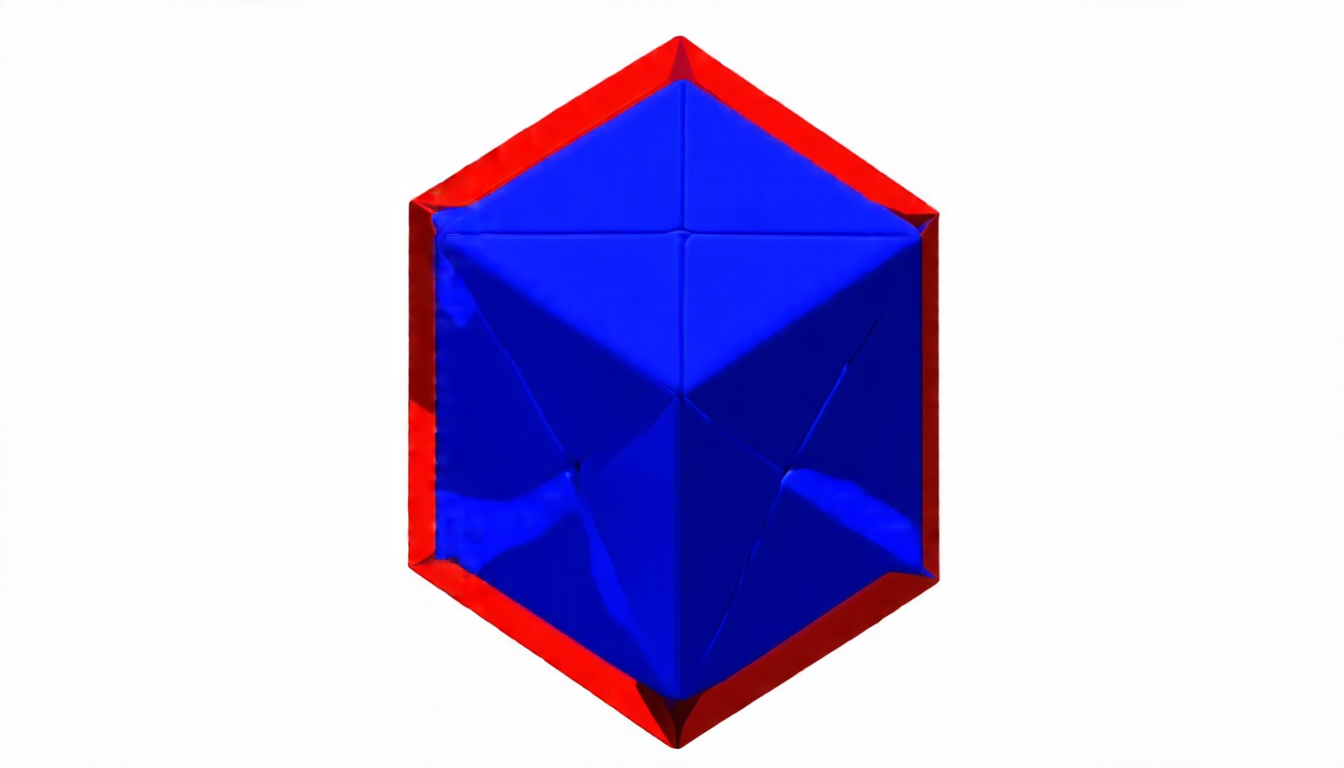
The PolyhedronNet, a new artificial intelligence (AI) system designed for learning representations of three-dimensional (3D) polyhedral objects, has been developed by researchers. The system is capable of capturing comprehensive and informative representations of complex geometric shapes, which can be used in various applications such as classification, clustering, and generation.
PolyhedronNet uses a surface-attributed graph (SAG) to model the vertices, edges, faces, and their geometric interrelationships within a polyhedron. The SAG is then broken down into local rigid representations, which are learned using intra-face and inter-face geometric message passing modules. This hierarchical aggregation process enables PolyhedronNet to effectively capture complex geometric relationships between different parts of the polyhedron.
The system has been tested on four distinct datasets, including MNIST-C, Building, ShapeNet-P, and ModelNet-P, with impressive results. In classification tasks, PolyhedronNet outperformed existing methods by a significant margin, achieving accuracy rates above 90% in most cases. In retrieval tasks, the system was able to efficiently retrieve objects from large datasets, demonstrating its ability to capture nuanced geometric features.
One of the key advantages of PolyhedronNet is its ability to handle complex polyhedral shapes with multiple faces and edges. This allows it to be used in a wide range of applications, such as computer-aided design (CAD), robotics, and 3D printing.
The development of PolyhedronNet has also shed light on the importance of understanding geometric relationships between different parts of an object. By capturing these relationships, the system is able to learn more comprehensive and informative representations of complex shapes, which can be used in a variety of applications.
Overall, PolyhedronNet represents an important step forward in the development of AI systems capable of learning from and working with complex geometric data. Its ability to capture nuanced geometric features and understand relationships between different parts of an object make it a powerful tool for a wide range of applications.
Cite this article: “PolyhedronNet: A Novel AI System for Learning Representations of 3D Polyhedral Objects”, The Science Archive, 2025.
Artificial Intelligence, Polyhedron, Three-Dimensional Objects, Geometric Shapes, Machine Learning, Classification, Clustering, Generation, Computer-Aided Design, Robotics.





