

Thursday 27 March 2025
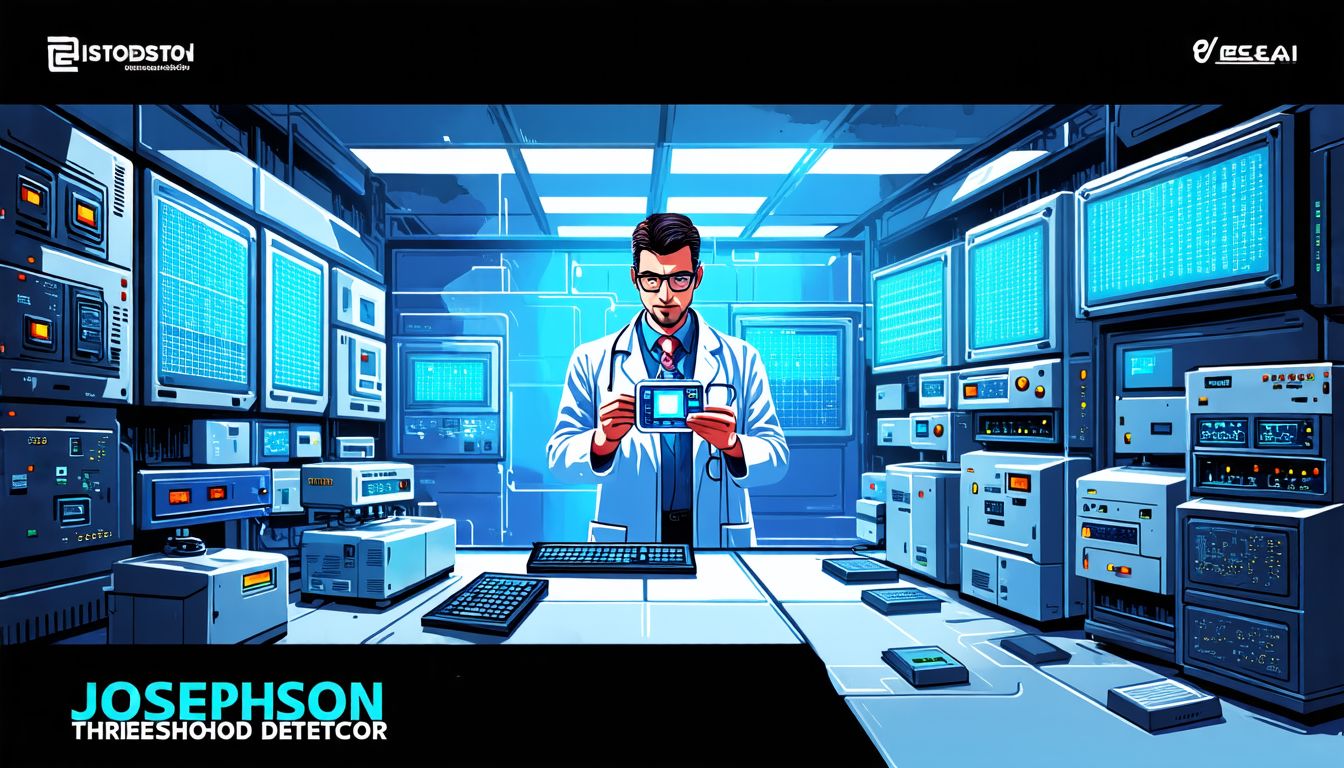
Scientists have made a significant breakthrough in developing a new type of detector that can identify even the weakest signals of microwave photons, a crucial component in quantum communication and information processing.
The device, known as a Josephson threshold detector (JTD), uses a superconducting material to amplify weak electrical signals, allowing it to detect photons with energies as low as -125.5 decibels per milliwatt. This is an incredible achievement, considering that most detectors can only pick up signals with energies of around -90 decibels per milliwatt.
The JTD works by using a superconducting material called aluminum to create a tiny circuit that can detect the presence of microwave photons. When a photon hits the circuit, it causes a small change in the electrical current flowing through it, which is then amplified by the superconducting material. This allows the detector to pick up even the weakest signals.
The JTD has several potential applications in fields such as quantum communication and cryptography, where secure transmission of information is crucial. It could also be used in medical imaging techniques such as magnetic resonance imaging (MRI), which relies on detecting weak magnetic signals.
One of the key advantages of the JTD is its ability to detect photons with very low energies, making it much more sensitive than traditional detectors. This means that it can pick up signals that would otherwise be lost, allowing for more accurate and reliable detection.
The development of the JTD has significant implications for our understanding of quantum mechanics and the behavior of microwave photons. It also opens up new possibilities for applications in fields such as medicine and communication.
In addition to its potential practical uses, the JTD has also shed new light on the fundamental properties of superconducting materials. The researchers were able to study the behavior of these materials at very low temperatures, which is a key area of research in condensed matter physics.
The discovery of the JTD is an exciting development that could have far-reaching implications for our understanding of quantum mechanics and its applications. It is also a testament to the power of interdisciplinary research, bringing together experts from fields such as physics, materials science, and engineering to achieve a breakthrough.
Cite this article: “Groundbreaking Detector Breakthrough Enhances Quantum Communication and Information Processing”, The Science Archive, 2025.
Quantum Communication, Microwave Photons, Josephson Threshold Detector, Superconducting Materials, Aluminum, Quantum Mechanics, Magnetic Resonance Imaging, Mri, Condensed Matter Physics, Interdisciplinary Research.





