

Friday 28 March 2025
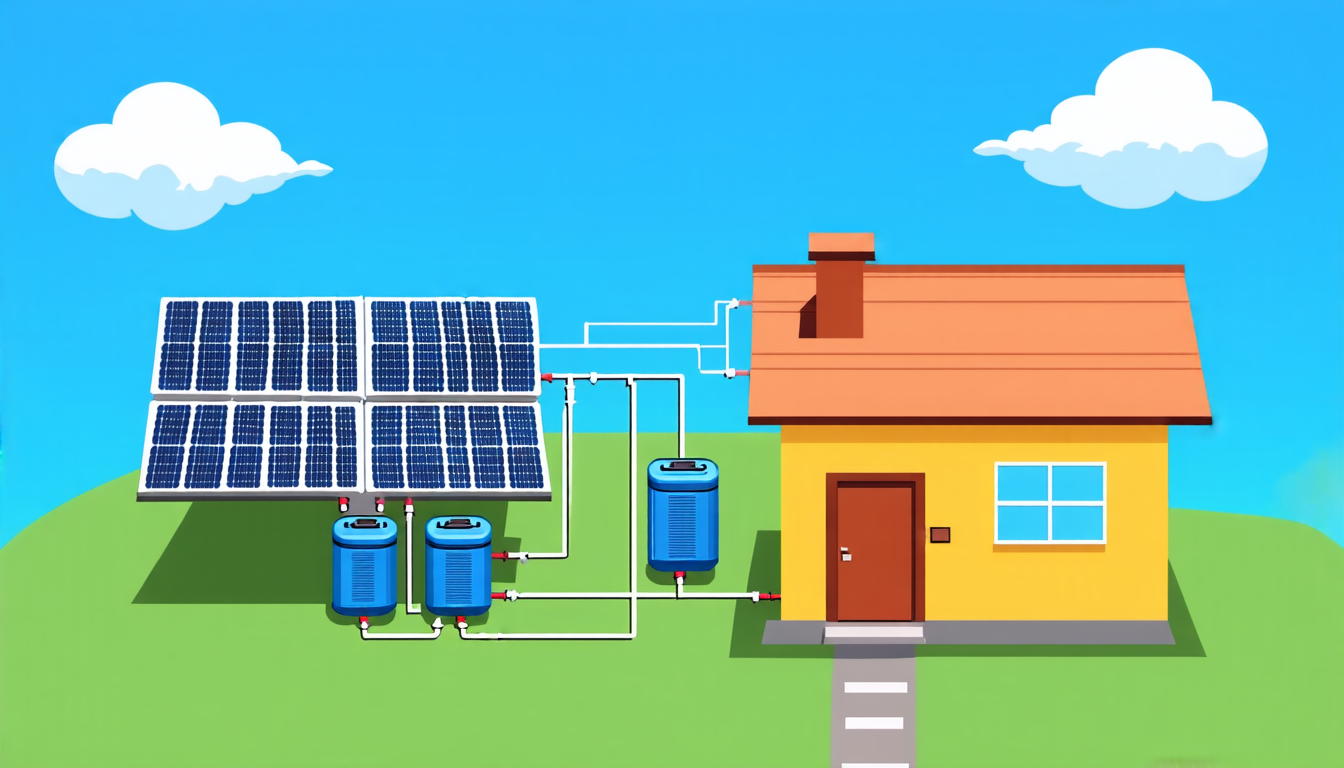
The quest for a more efficient and sustainable energy system has led researchers to explore innovative solutions, including the development of transactive energy markets (TEMs). These markets enable households to act as both producers and consumers of electricity, leveraging distributed energy resources like solar panels and battery storage. A new study published in IEEE Transactions on Power Systems presents a deep reinforcement learning (DRL) model designed to optimize bidding strategies for prosumers – households that generate their own electricity.
The researchers created a double auction-based TEM, where market operators and multiple prosumers interact to determine the optimal energy trading decisions. The DRL model is trained using data from a simulated environment, mimicking real-world scenarios. By leveraging neural networks and distributed learning, the model enables prosumers to make informed decisions about their energy consumption and generation.
The study demonstrates the effectiveness of the proposed model in maximizing prosumer economic profits and social welfare while reducing transmission pressure on the grid. The results show that the DRL model outperforms traditional RL models adopted in existing literature, achieving higher rewards for prosumers.
One of the key challenges in TEMs is the need to balance energy supply and demand in real-time. The proposed model addresses this issue by integrating multiple DER-equipped prosumers as buyers or sellers in a single market. This allows for more efficient energy trading and reduces the stress on the grid during peak hours.
The DRL model also takes into account factors like weather forecasts, temperature, and battery state-of-charge to optimize bidding strategies. By considering these factors, the model can predict energy demand and adjust its bidding accordingly. For instance, during hot summer days when air conditioning usage is high, the model may recommend that prosumers generate more electricity or purchase it from the grid at a higher price.
The study’s findings have significant implications for the development of smart grids. By integrating DRL models into TEMs, households can become active participants in the energy market, reducing their reliance on traditional grid infrastructure. This not only benefits prosumers but also promotes a more decentralized and resilient energy system.
The proposed model is still in its early stages, and further research is needed to refine its performance. However, the results are promising, and the potential for DRL models to transform the energy market is substantial. As the world continues to transition towards a cleaner and more sustainable energy future, innovative solutions like TEMs with DRL will play an increasingly important role in shaping our energy landscape.
Cite this article: “Deep Reinforcement Learning for Optimizing Energy Trading Decisions in Transactive Energy Markets”, The Science Archive, 2025.
Here Are The 10 Keywords: Energy Markets, Transactive Energy, Deep Reinforcement Learning, Prosumers, Distributed Energy Resources, Solar Panels, Battery Storage, Smart Grids, Neural Networks, Distributed Learning





