

Sunday 30 March 2025
In a significant breakthrough, scientists have developed a new framework that enables artificial intelligence (AI) models to learn and adapt across vastly different domains, without requiring extensive retraining or fine-tuning.
Traditionally, AI models are designed to perform well on specific tasks, such as image recognition or natural language processing. However, when faced with novel tasks or data from unrelated fields, these models often struggle to generalize their knowledge effectively. This limitation has hindered the widespread adoption of AI in real-world applications, where adaptability and flexibility are crucial.
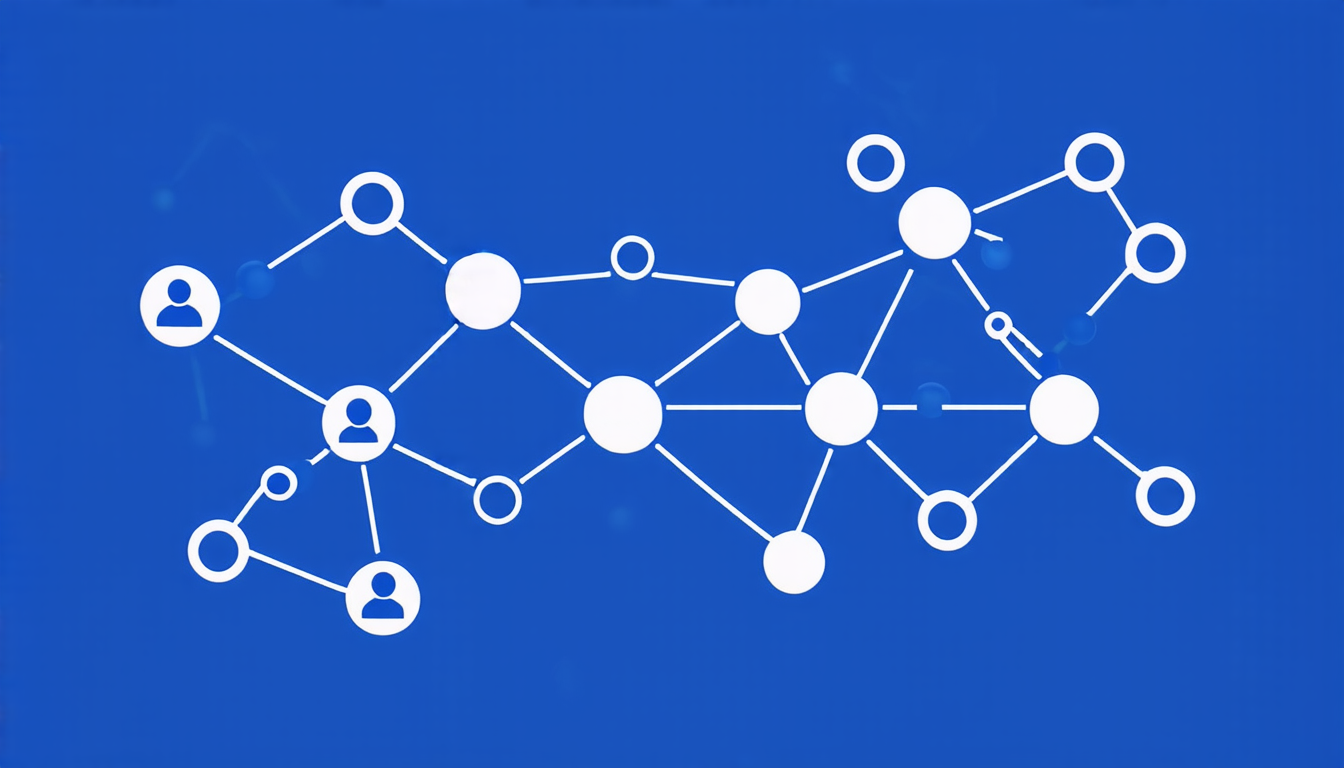
The new framework, dubbed GraphBridge, tackles this challenge by introducing a novel architecture that combines the strengths of both graph neural networks (GNNs) and transfer learning techniques. GNNs are a type of AI model specifically designed to analyze complex relationships between data points in graphs, such as social networks or molecular structures. Transfer learning, on the other hand, enables models to leverage knowledge gained from one task and apply it to another related task.
GraphBridge achieves this adaptability by incorporating a side network that learns to extract relevant information from pre-trained GNNs. This side network is then fine-tuned using a novel tuning algorithm, which adapts the model’s parameters to the specific downstream task at hand.
The researchers tested GraphBridge on a range of challenging transfer learning scenarios, including graph-level and node-level classification tasks across various domains. The results were impressive: GraphBridge consistently outperformed traditional fine-tuning methods, often by significant margins.
One of the most striking aspects of GraphBridge is its ability to generalize well across different datasets and domains. In experiments involving node- classification tasks on social network data, for example, the model performed equally well on datasets from unrelated fields, such as molecular biology or text analysis.
The implications of this breakthrough are far-reaching. With GraphBridge, AI models can be designed to learn and adapt more easily across a wide range of applications, from healthcare and finance to education and environmental monitoring. This increased flexibility and scalability will enable the development of more sophisticated AI systems that can tackle complex real-world problems.
In addition, GraphBridge has the potential to accelerate the pace of scientific discovery and innovation by enabling researchers to leverage knowledge gained in one field to inform and improve their work in another. For instance, a model trained on graph-based molecular structures could be fine-tuned for applications in materials science or pharmaceutical research.
Cite this article: “GraphBridge: A Novel AI Framework Enabling Cross-Domain Adaptability”, The Science Archive, 2025.
Artificial Intelligence, Machine Learning, Transfer Learning, Graph Neural Networks, Gnns, Graphbridge, Adaptability, Flexibility, Scalability, Domain Adaptation.





