

Sunday 30 March 2025
The quest for a model that can adapt to new data without needing retraining has long been a holy grail of artificial intelligence research. Recently, scientists have made significant progress in this area by developing a novel approach that uses generative adversarial networks (GANs) to bypass the need for labeled source data.
In traditional machine learning, when faced with a new dataset, models are trained on both labeled and unlabeled target data. However, this approach has its limitations – what if the target data is scarce or difficult to obtain? That’s where unsupervised domain adaptation comes in, a technique that enables models to adapt to new data without requiring additional labeled source data.
The key challenge lies in finding a way to align the distribution of features between the source and target domains. This can be achieved by using GANs, which consist of two neural networks: a generator that creates synthetic data, and a discriminator that tries to distinguish between real and generated samples. By training these networks together, they learn to recognize patterns in both the source and target domains.
The innovation lies in the way the model is trained. Instead of simply using labeled target data for adaptation, the GAN is used to generate new data that is more representative of the target domain. This synthetic data is then used to adapt the model, allowing it to learn from the target domain without requiring additional labels.
Experiments have shown promising results – the model was able to achieve high accuracy on a variety of tasks, including image classification and object detection. Notably, the performance improved significantly when compared to traditional unsupervised domain adaptation methods.
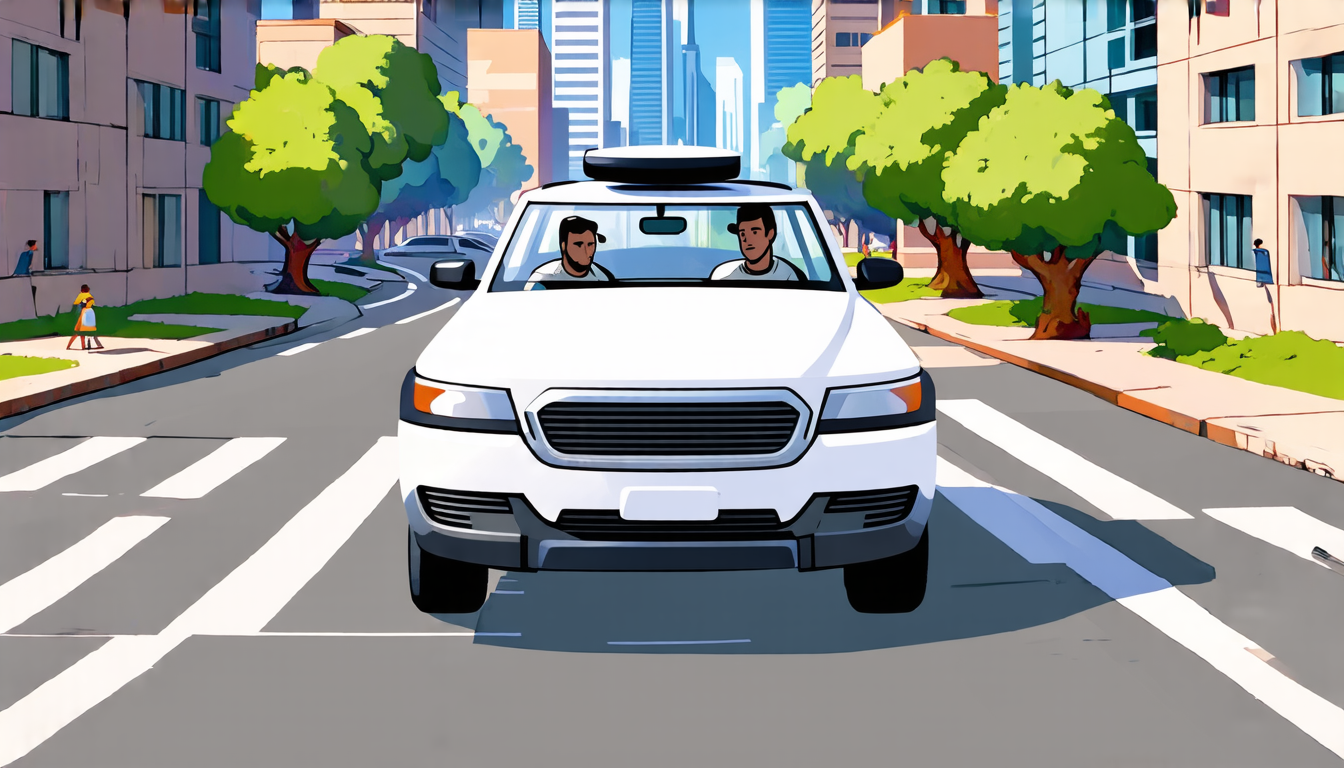
This breakthrough has significant implications for applications where data is limited or difficult to obtain. For instance, in autonomous vehicles, this technology could enable self-driving cars to adapt to new environments without needing retraining on large datasets of labeled images.
Furthermore, the approach can be extended to other areas such as natural language processing and speech recognition, where domain adaptation is essential for improving performance.
While there are still challenges to overcome, this innovative solution has opened up new possibilities for unsupervised domain adaptation. By leveraging GANs to generate synthetic data, models can now adapt to new domains without requiring additional labeled data, paving the way for more efficient and effective machine learning applications.
Cite this article: “Adapting to New Data: A Breakthrough in Unsupervised Domain Adaptation”, The Science Archive, 2025.
Artificial Intelligence, Generative Adversarial Networks, Unsupervised Domain Adaptation, Machine Learning, Labeled Data, Synthetic Data, Neural Networks, Image Classification, Object Detection, Natural Language Processing.





