

Monday 31 March 2025
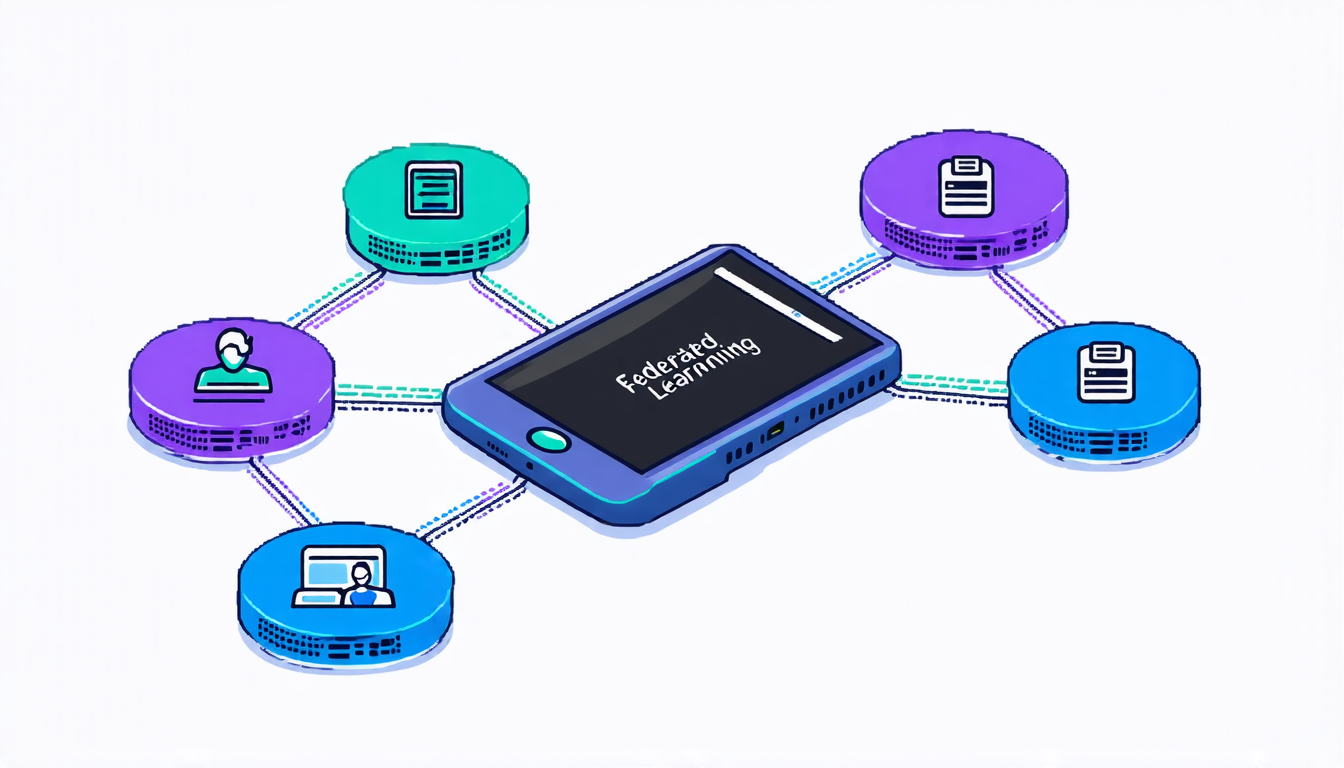
Federated learning, a technique that enables multiple devices or organizations to jointly train machine learning models without sharing their individual data, has been gaining traction in recent years. The approach offers a promising solution for addressing privacy concerns and ensuring the security of sensitive information. However, traditional federated learning methods often struggle with heterogeneous clients, where devices have different system resources, network connectivity, and data distributions.
To address this challenge, researchers have proposed various techniques, such as model pruning, knowledge distillation, and adaptive compression. These methods aim to optimize model accuracy while reducing the computational overhead on resource-constrained clients. However, these solutions often require significant modifications to the original machine learning models, which can be impractical for widespread adoption.
A new paper published in a leading academic journal presents an innovative approach to federated learning that tackles the heterogeneity challenge head-on. The authors propose FedConv, a client-friendly framework that minimizes the system overhead on resource-constrained mobile devices by generating heterogeneous sub-models from a global model using convolutional compression.
The key insight behind FedConv is that not all clients need to be trained on the same level of detail. By compressing the global model into smaller, more lightweight sub-models, researchers can adapt the training process to each client’s unique capabilities and data distribution. This approach enables devices with limited resources to participate in federated learning while still achieving accurate model updates.
To achieve this, FedConv employs a novel convolutional compression technique that learns the parameters of the heterogeneous sub-models via convolutional neural networks. The authors demonstrate that this method can significantly reduce the computational overhead on clients without sacrificing model accuracy.
The framework also includes a transposed convolutional dilation module to convert the heterogeneous client models back into a unified size, allowing for seamless aggregation and updates. This ensures that all clients contribute to the global model in a meaningful way, even with their limited resources.
Extensive experiments on six datasets demonstrate that FedConv outperforms state-of-the-art federated learning systems in terms of model accuracy (by more than 35% on average), computation overhead (with 33% reduction), and communication overhead (with 25% reduction). These results suggest that FedConv can efficiently enable widespread participation in federated learning, even among devices with limited capabilities.
The implications of FedConv are far-reaching, as it has the potential to revolutionize various applications where federated learning is critical, such as healthcare, finance, and education.
Cite this article: “Revolutionizing Federated Learning with FedConv: A Client-Friendly Framework for Heterogeneous Devices”, The Science Archive, 2025.
Federated Learning, Convolutional Compression, Heterogeneous Clients, Model Pruning, Knowledge Distillation, Adaptive Compression, Client-Friendly Framework, Transposed Convolutional Dilation, Machine Learning Models, Data Distribution.





