

Saturday 05 April 2025
Robots are becoming increasingly sophisticated, and one of the key challenges they face is dealing with unexpected disturbances. These can be anything from a sudden change in their environment to a malfunction in their own systems. In order to overcome these challenges, researchers have developed a new type of disturbance observer that allows robots to estimate and compensate for disturbances in real-time.
The traditional approach to disturbance estimation involves using sensors to measure the effects of the disturbance on the robot’s motion. However, this can be difficult and may not provide accurate results. The new approach, on the other hand, uses a combination of mathematical models and machine learning algorithms to estimate the disturbance directly from the robot’s sensor data.
One of the key advantages of this new approach is its ability to handle complex disturbances that cannot be accurately modeled using traditional methods. This makes it particularly useful for robots that are designed to operate in uncertain or dynamic environments, such as search and rescue robots or industrial robots that need to adapt to changing production lines.
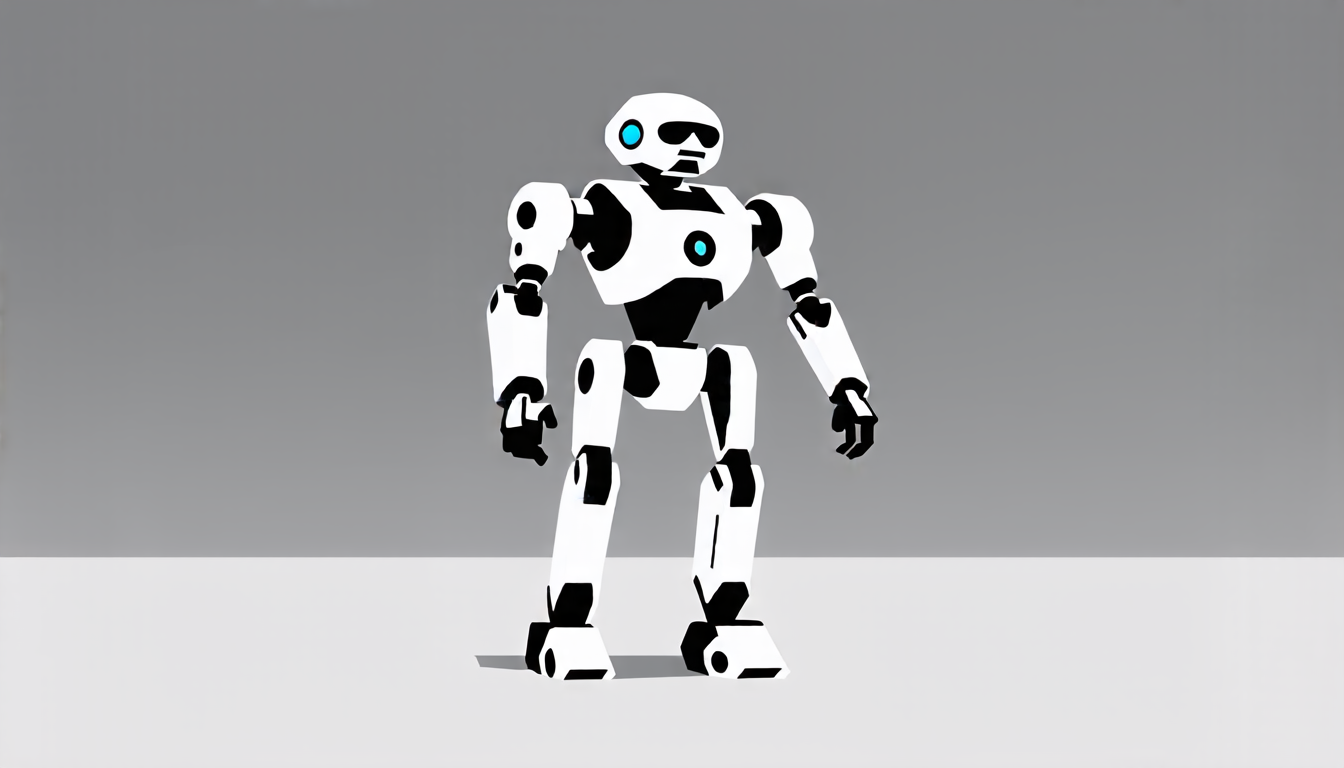
The disturbance observer has been tested on a number of different types of robots, including legged robots like the one used by Boston Dynamics’ Atlas robot. These robots have multiple joints and can move in complex ways, making them challenging to control in the presence of disturbances. However, the new approach has been shown to be effective in improving the stability and performance of these robots.
The observer works by using a mathematical model of the robot’s dynamics to estimate the disturbance from the sensor data. This is done using a combination of machine learning algorithms and optimization techniques. The estimated disturbance is then used to adjust the robot’s control signals, allowing it to adapt to changing conditions and maintain its stability.
One of the key benefits of this approach is that it can be implemented on robots with limited processing power and memory, making it suitable for use in a wide range of applications. Additionally, the observer can be easily integrated into existing control systems, allowing researchers to test and refine it using real-world data.
The development of this new disturbance observer has the potential to significantly improve the performance and reliability of robots in a variety of applications. By enabling them to better adapt to changing conditions and maintain their stability in the face of disturbances, it could help to make robots more effective and efficient tools for industries such as manufacturing, healthcare, and transportation.
In the future, researchers plan to continue refining and testing the observer on different types of robots and in various environments. They also hope to explore its potential applications in fields such as autonomous vehicles and humanoid robotics.
Cite this article: “Unleashing the Power of Disturbance Estimation: A Novel Approach to Enhancing Robustness in Legged Robotics”, The Science Archive, 2025.
Robots, Disturbance Observer, Machine Learning, Optimization Techniques, Sensor Data, Control Signals, Mathematical Models, Dynamics, Stability, Reliability





