

Sunday 06 April 2025
A team of researchers has developed a brain-inspired framework for identifying similar datasets in big data, mimicking the way our own brains process and retrieve information.
The new approach combines elements of Hopfield networks, a type of neural network known for its associative memory capabilities, with MapReduce, a distributed processing technique used in large-scale data analysis. This fusion enables the system to efficiently identify patterns and relationships across vast amounts of data.
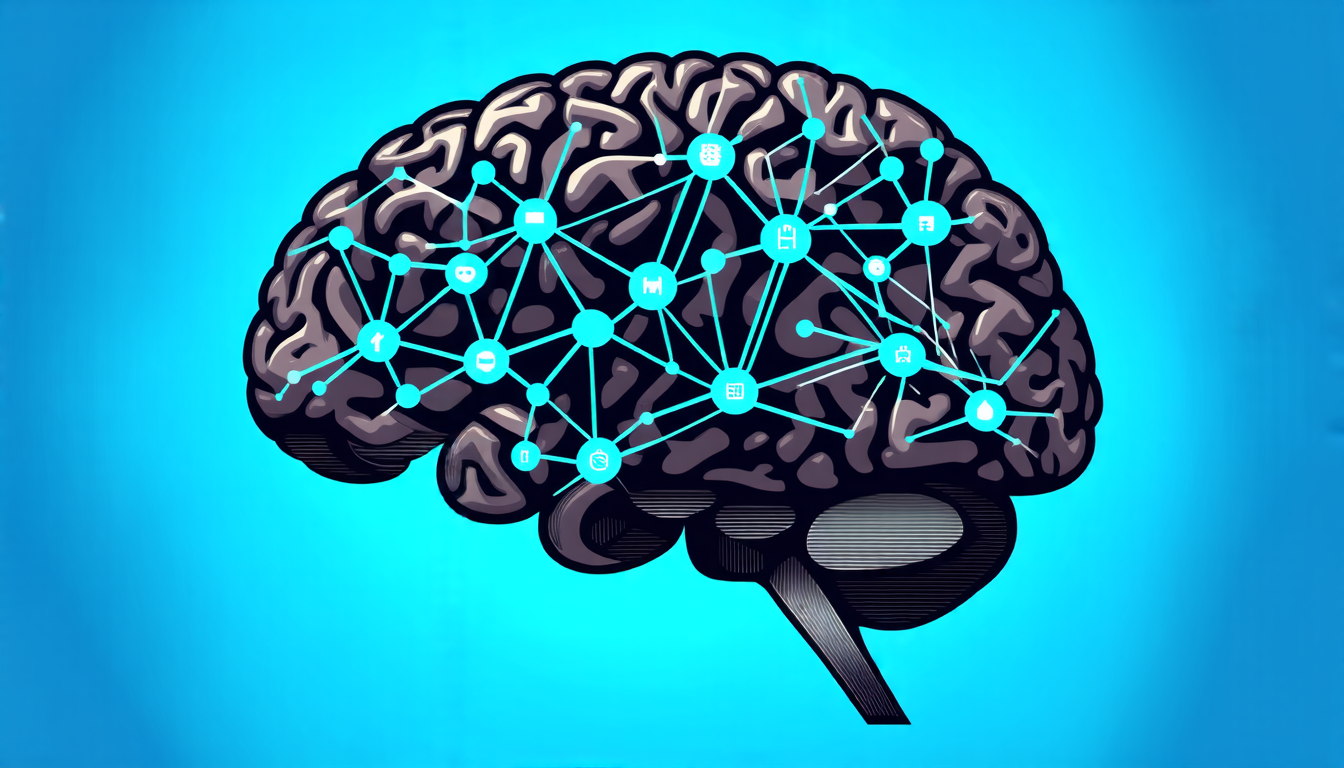
At its core, the framework is designed to mimic the way our brains process information. It uses two interconnected modules – one inspired by the right hemisphere of the brain, responsible for processing new information, and another modeled on the left hemisphere, which retrieves learned representations to establish meaningful associations.
The system begins by training a Hopfield network with patterns from each dataset. This creates an associative memory that can recall similar patterns when presented with new data. The MapReduce module then combines the individual weight matrices generated by the Hopfield network, allowing the system to identify relationships between datasets at scale.
As the system processes more data, it adapts and refines its understanding of the relationships between different patterns and datasets. This self-optimizing mechanism enables the framework to learn from experience and improve its accuracy over time.
The researchers tested their approach on a range of datasets, including those with varying levels of complexity and size. The results showed that the system was able to accurately identify similar datasets, even in cases where the relationships between patterns were subtle or nuanced.
This brain-inspired approach has significant implications for big data analysis. By leveraging the power of Hopfield networks and MapReduce, it enables researchers to efficiently identify patterns and relationships across vast amounts of data, opening up new possibilities for discovery and innovation.
The team’s work also highlights the potential benefits of integrating insights from cognitive science and neuroscience into artificial intelligence systems. By designing AI models that mimic the way our brains process information, we may be able to create more efficient, effective, and adaptable machines that can learn and improve over time.
Cite this article: “Unleashing the Power of Big Data: A Brain-Inspired Framework for Unsupervised Learning and Pattern Recognition”, The Science Archive, 2025.
Big Data, Brain-Inspired Framework, Hopfield Networks, Mapreduce, Neural Network, Associative Memory, Cognitive Science, Neuroscience, Artificial Intelligence, Pattern Recognition





