

Sunday 06 April 2025
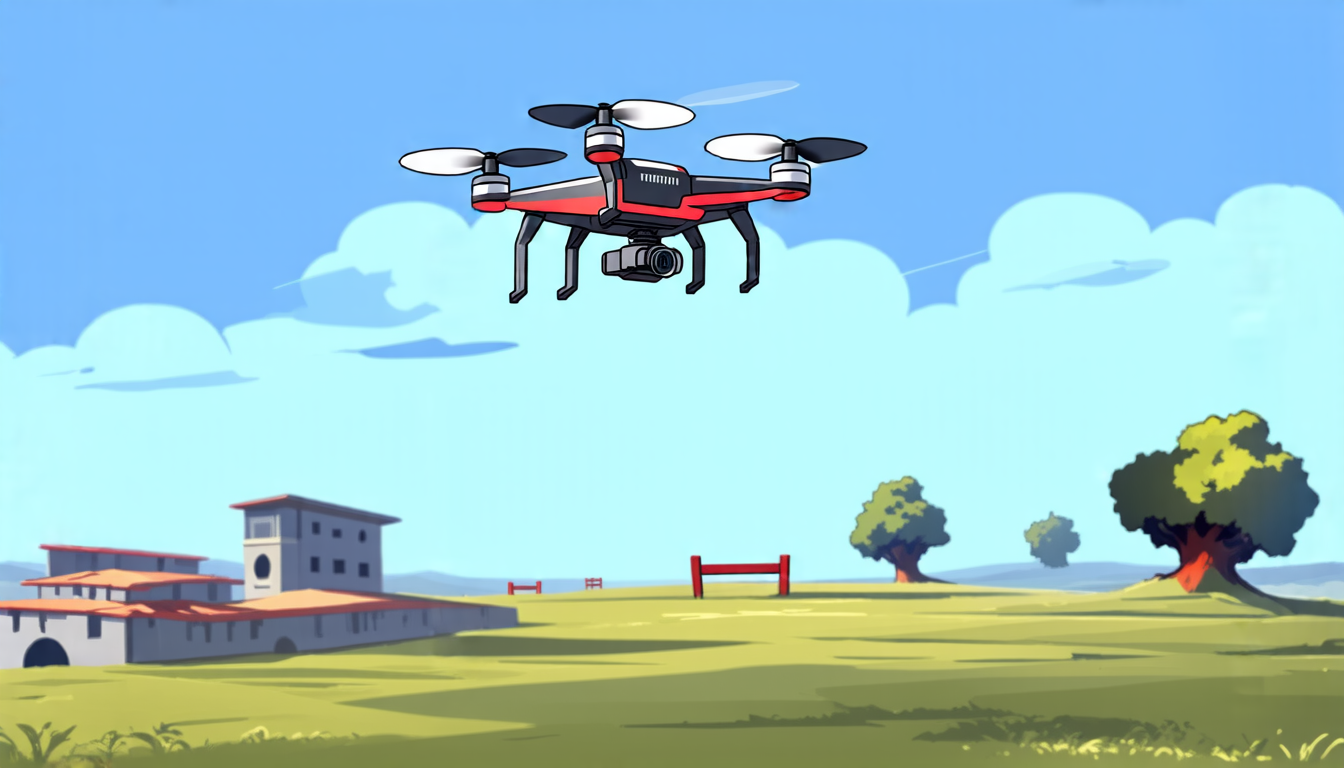
The autonomous flight of quadrotors, once a futuristic concept, is now a reality. But as these flying machines become more sophisticated, so too do the challenges they face in navigating complex environments. Researchers have been working on developing more effective planning and control methods to ensure safe and efficient flight.
One of the key obstacles is the presence of wind disturbances. These can cause quadrotors to deviate from their planned trajectory, potentially leading to collisions or loss of control. To address this issue, scientists have developed a new framework that incorporates wind disturbance estimation into both the planning and control phases.
The system uses a generalized proportional integral observer to predict wind patterns and adjust the quadrotor’s flight path accordingly. This approach allows for more accurate tracking of the planned trajectory, even in the presence of strong winds. In simulation tests, the framework demonstrated improved performance compared to traditional methods.
But wind is not the only challenge facing quadrotors. Dynamic obstacles, such as other flying objects or moving people, can also pose a risk to safe flight. To mitigate this, the researchers have developed a replanning mechanism that triggers when a potential collision is detected. This ensures that the quadrotor can adapt its trajectory in real-time to avoid the obstacle.
The framework has been tested in both simulation and real-world environments, with promising results. In one experiment, a quadrotor was flown through a wind tunnel while avoiding obstacles and tracking a planned path. The results showed that the system was able to effectively compensate for wind disturbances and navigate around dynamic obstacles.
This technology has significant potential applications in areas such as search and rescue, surveillance, and cargo transport. By enabling quadrotors to fly safely and efficiently in complex environments, these autonomous machines can be used to access remote or hard-to-reach areas, providing a new level of flexibility and capability.
The development of this framework is an important step towards the widespread adoption of autonomous flight technology. As quadrotors become more sophisticated, they will require increasingly advanced planning and control methods to ensure safe and efficient operation. This research provides a valuable contribution to the field, demonstrating the potential for improved performance and safety in autonomous flight systems.
Cite this article: “Autonomous Quadrotor Navigation in Dynamic Environments: A Framework for Safe and Efficient Flight”, The Science Archive, 2025.
Quadrotors, Autonomous Flight, Wind Disturbances, Planning, Control, Generalized Proportional Integral Observer, Simulation Tests, Dynamic Obstacles, Replanning Mechanism, Search And Rescue, Surveillance, Cargo Transport





