

Sunday 06 April 2025
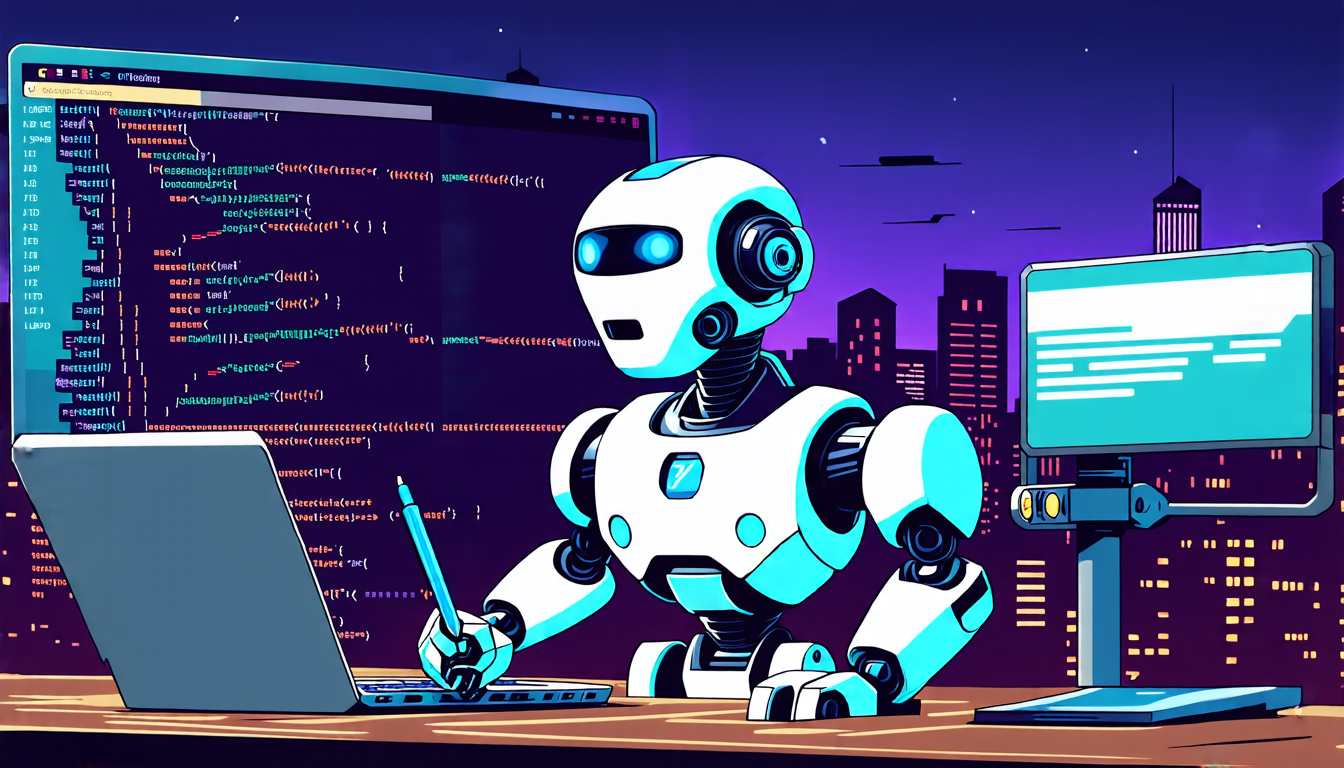
Researchers have made a significant breakthrough in developing artificial intelligence that can generate high-quality code, opening up new possibilities for software development and automation.
The team has created a system that uses large language models to learn patterns and structures in programming languages, allowing it to generate code that is not only correct but also efficient and maintainable. This technology has the potential to revolutionize the way we approach software development, making it faster, cheaper, and more accessible to a wider range of people.
One of the key challenges in developing this technology was teaching the AI system to understand the nuances of programming languages. Unlike natural language, which is governed by strict rules and syntax, programming languages have many subtle variations and exceptions that can make them difficult for machines to learn. To overcome this challenge, the researchers used a combination of machine learning algorithms and large datasets of code examples to train their system.
The result is an AI system that can generate high-quality code in a wide range of programming languages, including Python, Java, and C++. The system is also capable of adapting to new situations and learning from its mistakes, making it even more powerful and versatile.
This technology has many potential applications, from automating routine coding tasks to helping developers create complex software systems. It could also enable the creation of new types of software that are not currently possible with human-written code.
One of the most exciting possibilities is the potential for AI-generated code to be used in areas where it would be difficult or impossible for humans to write code, such as in situations where there is a high degree of complexity or uncertainty. For example, AI-generated code could be used to create software that can adapt to changing circumstances, such as traffic patterns or weather conditions.
In addition to its potential benefits, this technology also raises important questions about the role of human programmers and the future of software development. As AI systems become more advanced, they may eventually be able to generate high-quality code more quickly and efficiently than humans. This could lead to a shift in the way we approach software development, with machines taking on many of the tasks that are currently performed by humans.
However, it is also important to note that this technology is still in its early stages, and there are many challenges that need to be overcome before it can be widely adopted. For example, the system still requires a significant amount of training data and computational resources, which can be expensive and time-consuming. Additionally, there may be concerns about the potential for AI-generated code to contain errors or security vulnerabilities.
Cite this article: “Advancing Code Editing Capabilities: A Novel Data-Driven Approach to Improving Programming Efficiency”, The Science Archive, 2025.
Artificial Intelligence, Software Development, Automation, Programming Languages, Machine Learning, Code Generation, Natural Language Processing, Algorithm, Syntax, Complexity





