

Tuesday 08 April 2025
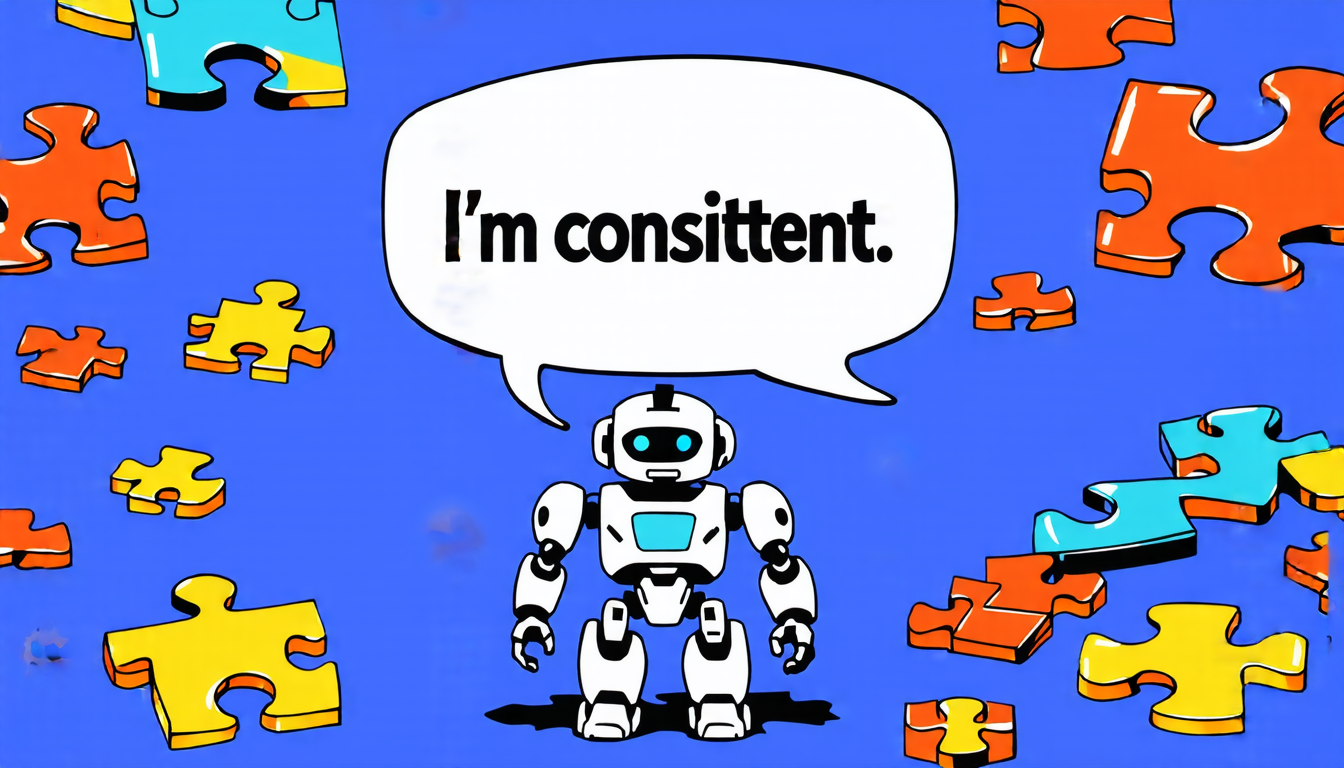
As we increasingly rely on large language models (LLMs) for tasks such as answering questions, generating text, and even making decisions, a new study sheds light on the importance of consistency in their responses. The research reveals that these advanced AI systems often fail to align their words with their deeds, leading to inconsistent results.
The study, published recently, analyzed the behavior of several popular LLMs, including GPT-4, Mistral-7B, Chatglm3-6B, and others. Researchers designed a novel evaluation benchmark called the Words and Deeds Consistency Test (WDCT) to assess the consistency between an LLM’s words and deeds. The WDCT consists of four domains: opinion versus action, non-ethical value versus action, ethical value versus action, and theory versus application.
The results showed that most LLMs struggled to maintain consistency across different domains. In fact, only a few models demonstrated high levels of consistency in their responses. For instance, Mistral-7B and Chatglm3-6B-Base exhibited relatively consistent behavior, while others like Llama-2-7B and Llama-2-7B-Chat showed significant inconsistencies.
The study also explored the impact of separate alignment on an LLM’s consistency. The results indicated that aligning a model solely on words or deeds had little effect on improving its overall consistency. This suggests that the underlying knowledge guiding an LLM’s choices is not contained within a unified space, making it challenging to achieve consistent behavior.
The implications of these findings are significant. As we increasingly rely on LLMs for critical tasks, their inconsistencies can have far-reaching consequences. For instance, in decision-making applications, inconsistent responses from an LLM could lead to flawed or biased decisions. Similarly, in language translation or generation tasks, inconsistencies could result in inaccurate or confusing outputs.
The study’s authors suggest that the development of more advanced evaluation benchmarks and testing procedures is necessary to ensure the reliability and consistency of LLMs. This will require a deeper understanding of how these AI systems process information and make decisions.
In light of this research, it is essential for developers and users alike to be aware of the limitations and potential pitfalls of LLMs. By acknowledging their inconsistencies and working to improve their performance, we can harness the full potential of these advanced AI tools while minimizing their risks and limitations.
Cite this article: “Uncovering the Gap: Large Language Models Inconsistencies Revealed Through Novel Evaluation Benchmark”, The Science Archive, 2025.
Large Language Models, Consistency, Decision Making, Inconsistencies, Ai Systems, Evaluation Benchmarks, Testing Procedures, Information Processing, Decision-Making Applications, Natural Language Processing





