

Wednesday 16 April 2025
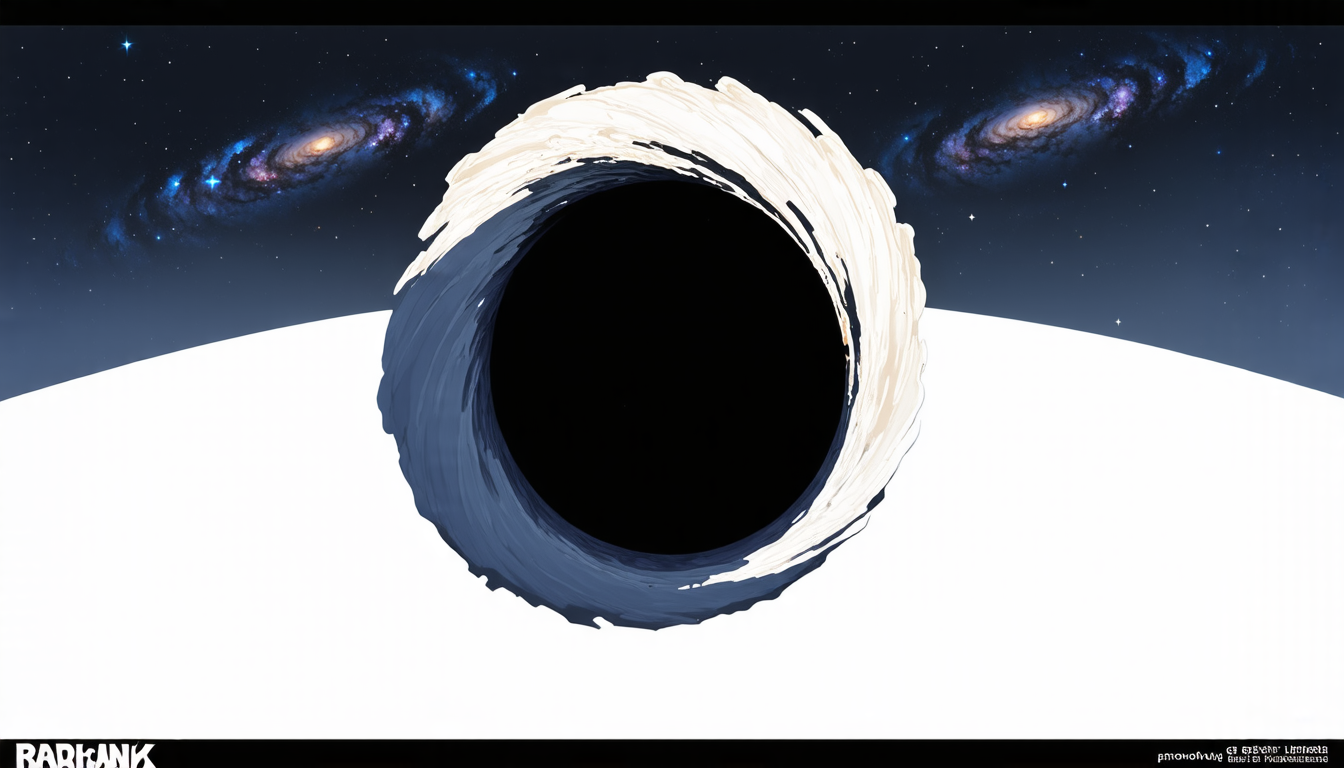
As we delve into the mysteries of the universe, a peculiar phenomenon has caught our attention – the potential presence of dark matter halos surrounding primordial black holes. These tiny, ancient objects have been hypothesized to have formed in the early universe and could make up a significant portion of the dark matter that makes up about 27% of the cosmos.
The idea of dark matter halos is not new; scientists have long suspected that these regions of space would form around massive objects like black holes. However, recent studies suggest that these halos may be more common than previously thought, and could potentially interact with normal matter in ways that are currently beyond our understanding.
One of the key findings is that the photons emitted by dark matter as it decays or annihilates within these halos would produce a unique spectrum that could be detected by telescopes. This spectral signature would be distinct from other astrophysical sources, allowing scientists to identify the presence of primordial black holes and their associated dark matter halos.
The calculations suggest that the photons emitted by the dark matter would be significantly redshifted due to the intense gravitational field surrounding the black hole. This redshifting effect would broaden the spectral lines, making them more difficult to detect. However, this very same property could also serve as a distinguishing feature, allowing scientists to identify the presence of these dark matter halos.
The implications of such findings are far-reaching and could have significant impacts on our understanding of the universe. For instance, if primordial black holes do make up part of the dark matter, it would challenge our current understanding of how they formed and evolved over time. Additionally, the detection of these halos could provide insight into the properties of dark matter itself, which remains one of the biggest mysteries in modern astrophysics.
The search for these dark matter halos is an ongoing endeavor, with scientists employing a range of observational and theoretical techniques to detect them. The challenge lies in distinguishing these signals from other astrophysical sources that could mimic their spectral signatures. Nevertheless, the potential rewards are substantial – the discovery of primordial black holes and their associated dark matter halos could revolutionize our understanding of the universe and its many mysteries.
As we continue to probe the depths of space and time, it is clear that the search for these enigmatic objects will be an exciting and challenging adventure.
Cite this article: “Unlocking the Secrets of Dark Matter with Primordial Black Holes”, The Science Archive, 2025.
Primordial Black Holes, Dark Matter, Halos, Astrophysics, Universe, Cosmology, Gravitational Field, Redshifted, Photons, Spectral Signature





